
Journal
What Is Quasi-Equity?

9 October 2026 | 3 min read
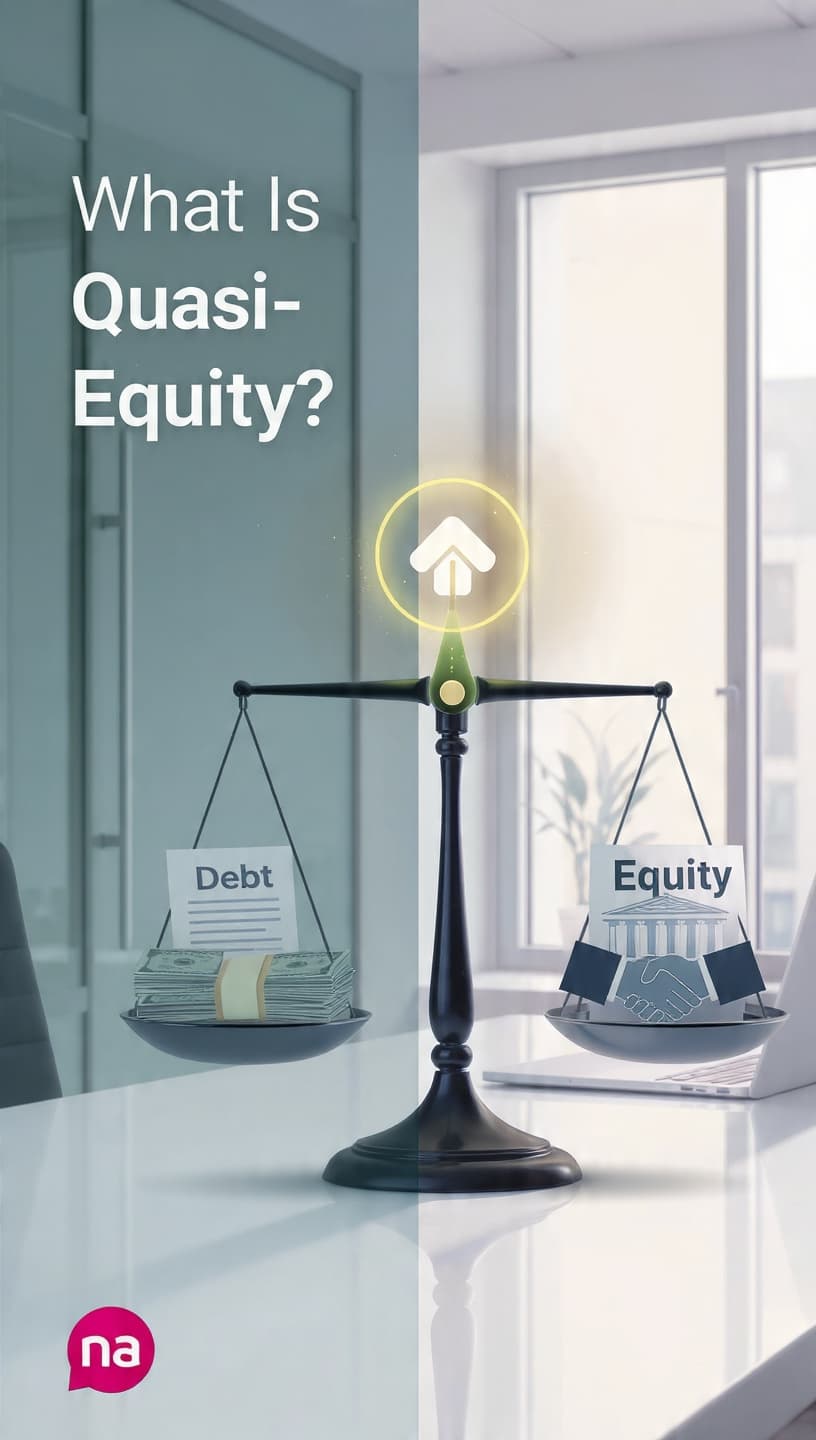
The Funding Option Between Debt and Equity
When founders hear “raise money,” they usually think of only 2 options: take a loan or sell equity.
But there’s a third option that’s becoming popular in Nigeria and across Africa: Quasi-Equity.
If you’re running a business and don’t want to give up too much ownership, but also can’t handle strict bank loan payments, this might be for you.
What Is Quasi-Equity?
Quasi-equity literally means “almost equity.”
It’s funding that behaves like a mix of debt and equity. You get capital for your business, but the repayment isn’t as rigid as a bank loan, and you don’t have to give up shares immediately like with VC.
Think of it as sitting in the middle:
Bank Loan = Debt → Fixed monthly payments, low risk for investor
Quasi-Equity = Hybrid → Flexible payments, medium risk
VC/Equity = Shares → No repayment, high risk, you lose ownership
4 Common Types of Quasi-Equity in Nigeria
1. Convertible Loans
The most popular with startups.
An investor gives you ₦10m today as a loan. Later, when you raise a big round, that ₦10m + interest converts into company shares.
Why founders like it: You delay valuation and dilution.
2. Revenue-Based Financing
You borrow ₦5m and agree to pay back 5% of your monthly revenue until you’ve paid ₦7.5m total.
No fixed EMI. If sales are low, you pay less. If sales are high, you pay faster.
Why founders like it: Perfect for e-commerce, fintech, and subscription businesses.
3. Mezzanine / Subordinated Debt
A loan that is paid back after your bank loan. Because it’s riskier for the lender, they charge higher interest and may ask for a small profit share.
Often used by bigger SMEs and real estate companies.
4. Redeemable Preference Shares
Looks like equity on paper, but the investor can ask for their money back after 3-5 years with agreed returns.
Common with DFIs like BOI, NIRSAL, and foreign impact investors.

Pros and Cons for Nigerian Founders
Pros:
- Less Dilution - You don’t give up equity on day 1
- Flexible Payments - Revenue-based models help during slow months
- Easier to Access - DFIs, angel investors, and funds like Ventures Platform offer this
- Signals Confidence - Investors are betting on your growth, not just collateral
Cons:
- More Expensive - Total payback is often higher than a bank loan
- Complex Terms - You’ll need a lawyer to review the agreement
- Caps and Covenants - Some deals cap how much you can borrow again
Who Should Consider Quasi-Equity?
Quasi-equity works best if you:
- Have revenue already, but not enough for a big bank loan
- Are growing fast but don’t want to dilute yet
- Are in fintech, healthtech, agri, or e-commerce in Nigeria
- Need ₦5m - ₦200m to scale operations, inventory, or hiring
DFIs like British International Investment, IFC, and BOI and funds like TLcom, Microtraction are actively doing quasi-equity deals in Nigeria.
Final Thoughts
Quasi-equity is not free money. But it gives you breathing room.
If a bank loan feels too stressful and giving up 20% equity feels too early, quasi-equity is the middle ground.
Before you sign anything: read the terms, understand the total repayment cap, and talk to a lawyer.
Bottom line: It’s debt with the flexibility of equity.

Book a session with Emmanuel Adams
Native calendar, no redirect — payment collects inline.


Comments